MeshContinuum connects to a MeshCore mesh through a supported Companion or Repeater and
gives you a web reader for its message history, plus remote management of the devices
connected to it.
The mesh itself keeps working exactly as MeshCore is designed to — offline, peer to peer,
with no cloud in the loop. This service is an optional companion to that, not a
replacement for it: your mesh does not depend on it, and does not stop working if it is
unreachable.
This service is invitation only. If you've been given access, enter your email and
we'll send you a one-time sign-in link.
How it fits together
MeshContinuum is an application layer around MeshCore — it does not replace MeshCore's
packet formats, radio routing, node identities, or normal Companion apps. Everything in
the shaded area is optional; the radios keep talking to each other without it.
A standard USB Companion can also reach MeshContinuum directly, through a small Pi
gateway agent and an authenticated connection — no MQTT broker required for that path.
What MeshContinuum adds on top of MeshCore
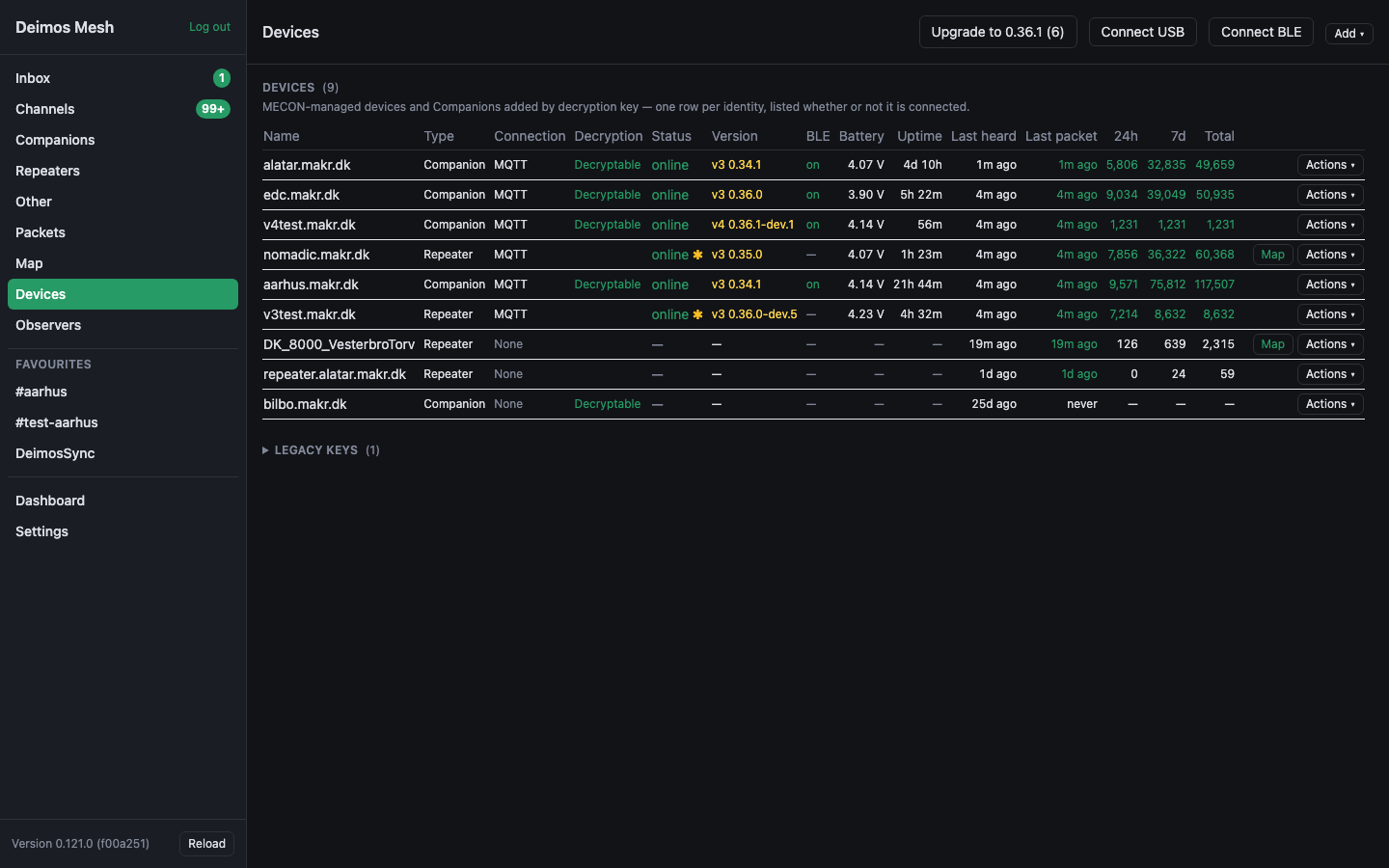
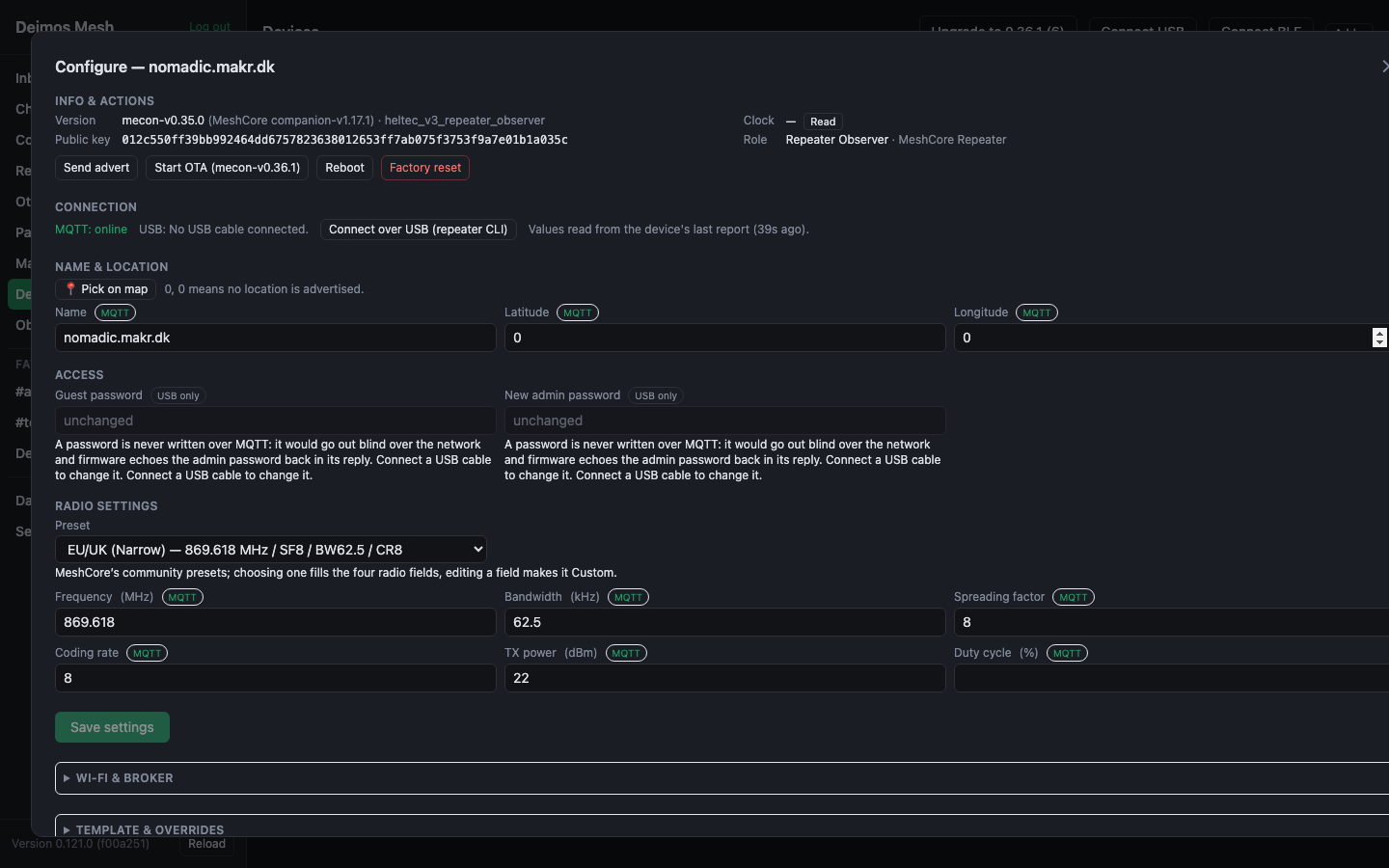
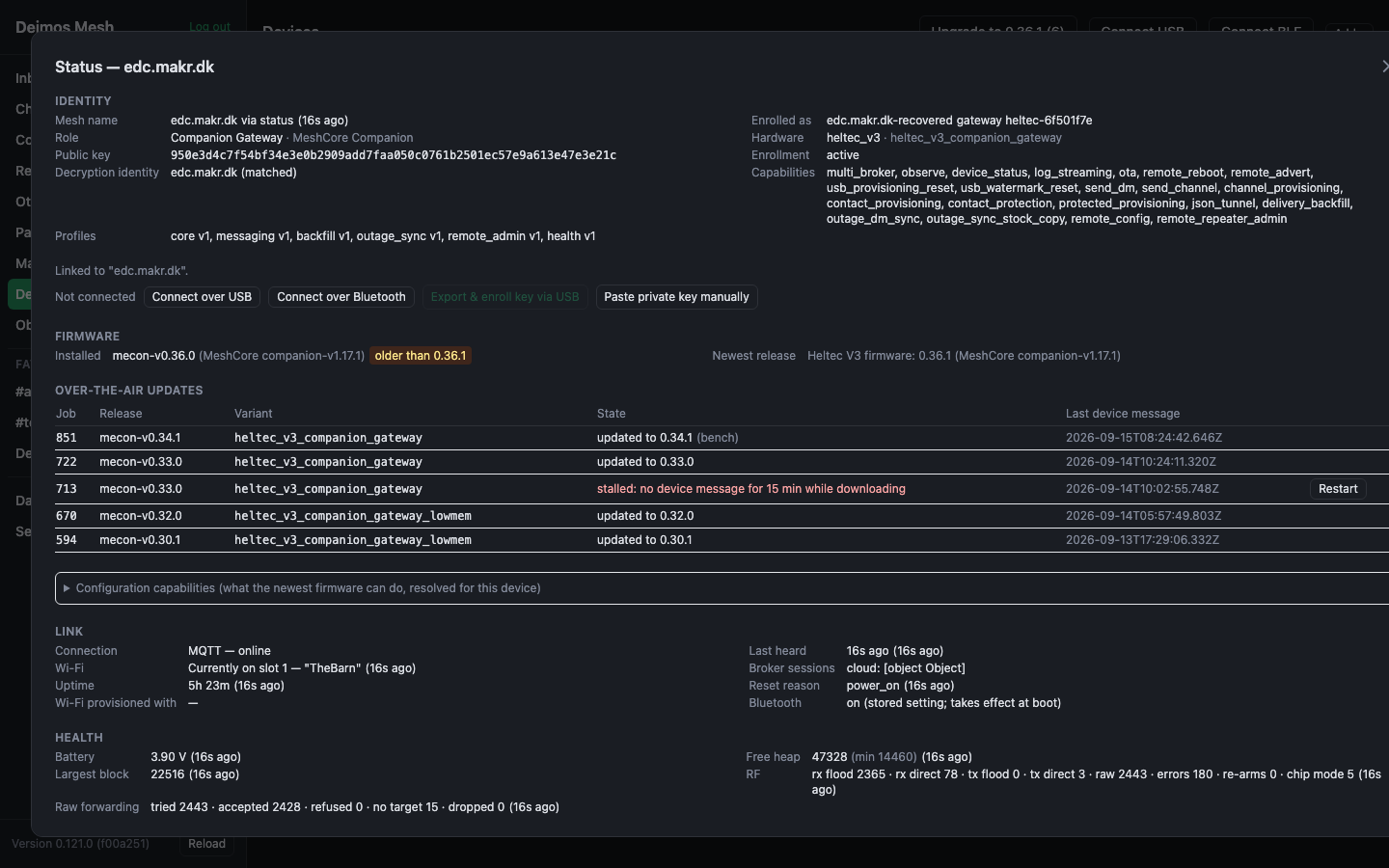
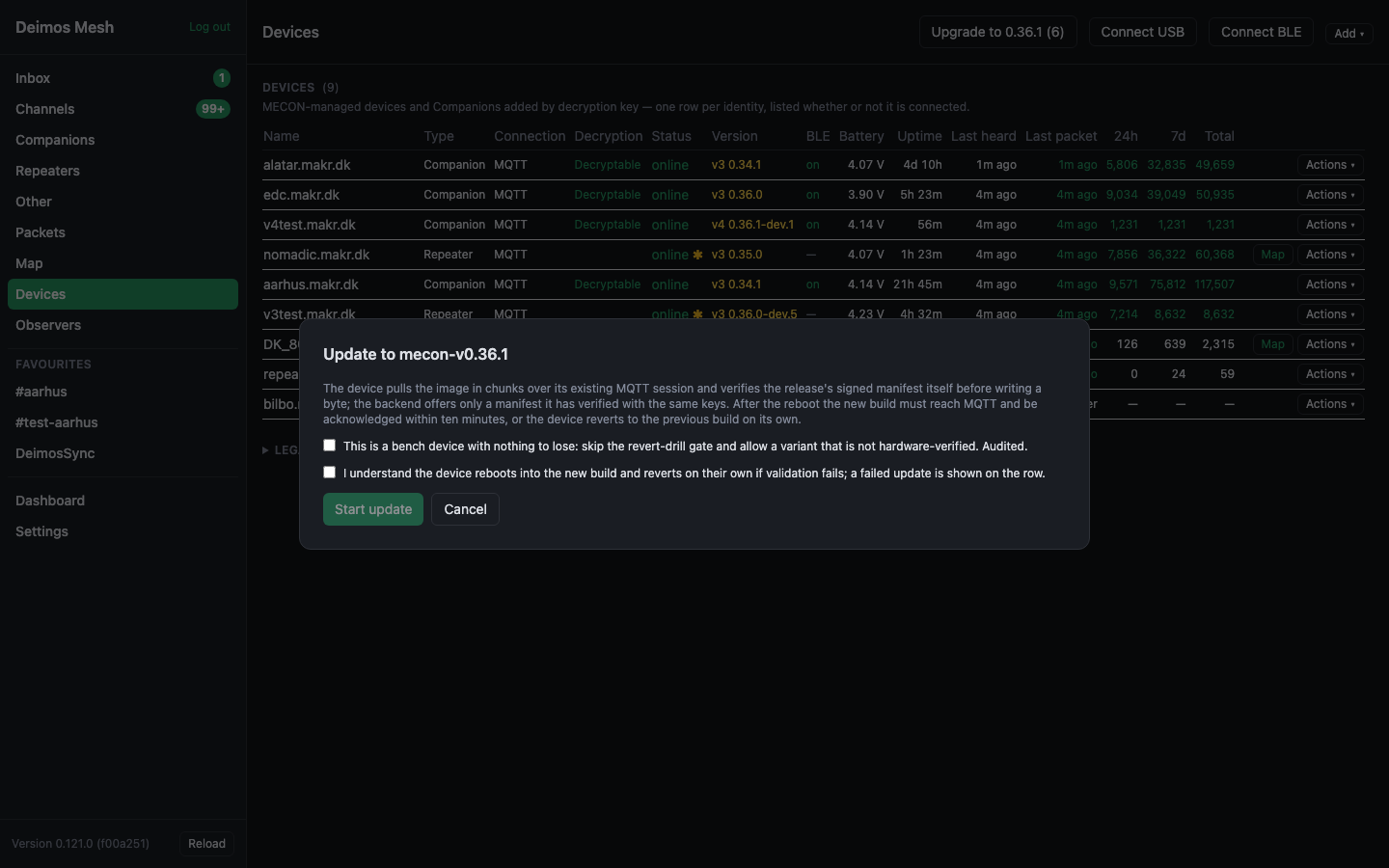
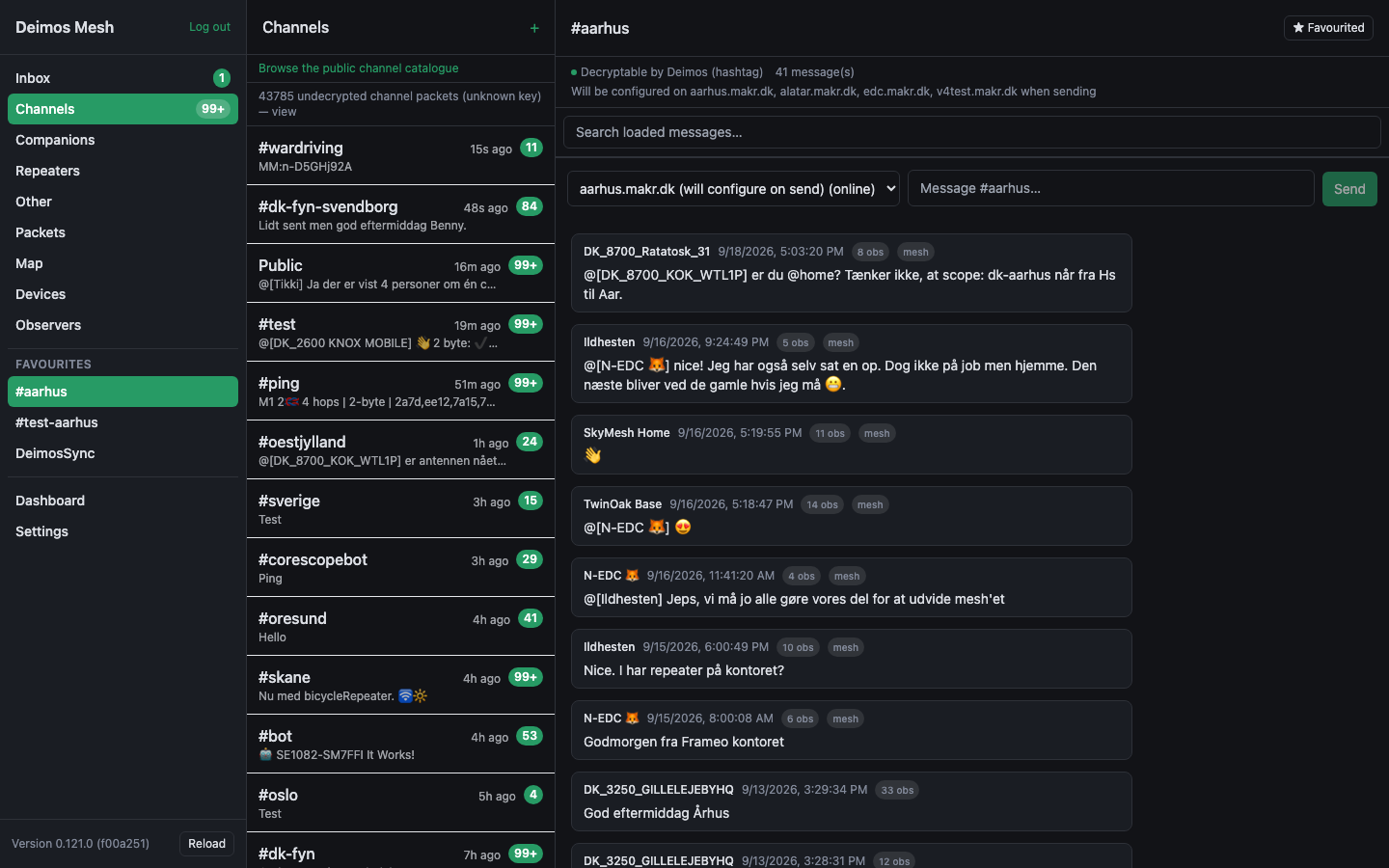
Live views from this instance's own Reader — an actual fleet of Companions and
Repeaters, not a mockup.
One inventory for every enrolled device
Every Companion and Repeater this instance knows — connection state, decryption
status, firmware version, battery, uptime and packet counts — in one list, kept
current whether or not a phone is anywhere nearby.
Remote configuration, over MQTT or USB
Radio parameters, name, location and access settings, read from and written back to
the real device — automatically over whichever transport is actually available
right now.
Diagnostic transparency
Identity, firmware, link health, update history and — when something goes wrong —
the device's own reported crash diagnostics. Nothing about a device's real state is
hidden from its own operator.
Signed, backend-scheduled firmware updates
A device pulls a new build over its existing connection and verifies the release's
signed manifest itself before writing a byte — and reverts on its own if the new
build never reconnects.
Read and send, from a browser
Channel history stays readable long after any one radio has moved on, each message
carries how many observers actually heard it, and a reply goes out through whichever
enrolled gateway is available.